
Which bean-to-cup coffee machine to buy? Our picks by budget
Which bean-to-cup coffee machine to buy depends on your budget and on how much espresso matters to you. Up to €500, our pick is the De’Longhi Magnifica S with one of our Everyday coffees; from about €530, an espresso machine with a separate grinder can make better espresso, if you are willing to learn. For one-touch drinks, a premium bean-to-cup such as the Jura J10 (about €2,000) does justice to more expressive coffees.
Prices are approximate, seen in France in mid-November 2026; they move a lot, especially around Black Friday. The usual price, when different, is in brackets.
Bean-to-cup vs espresso machine and grinder
A bean-to-cup machine grinds, doses and brews at the touch of a button. An espresso machine with a separate grinder leaves those steps to you.
| Bean-to-cup | Espresso machine + grinder | |
|---|---|---|
| Ease | One touch, the same cup for everyone | A learning curve; about 3–5 minutes per espresso, cleaning included |
| Espresso | Good, but below a good manual set-up: small doses, built-in grinder | A higher ceiling, once you have learned |
| Milk | One touch and consistent; often less silky and less hot | Silkier milk from the steam wand, with practice |
| Expressive coffees | Happiest with medium to medium-dark roasts | Grind, dose and temperature can be adjusted to suit them |
| Upkeep | Rinsing, descaling, filters; residue builds up out of sight | More daily wiping, but everything is in sight |
How budget changes the answer. Up to €500, buy a bean-to-cup: a decent espresso machine and grinder start at about €530 today. Between €500 and €1,000 the two routes cross: machine and grinder for better espresso if you will learn, a bean-to-cup for more drinks with no effort. From €1,000, premium bean-to-cups get more out of demanding coffees, and many people prefer them for that convenience. Above €2,000, extra money mainly buys features and finish.
The best bean-to-cup coffee machine under €500
| Machine | Price seen in France | Good at | Watch out for |
|---|---|---|---|
| De’Longhi Magnifica S (our pick) | about €260–280 (€300) | Simple and reliable; steel grinder, 13 settings | A double uses barely more coffee than a single; milk by hand with the steam wand |
| De’Longhi Magnifica Evo Next | about €500 (€600) | Automatic milk carafe; a UK tester rates its cup with the best bean-to-cups | Under €500 only at its current promotional price |
| Philips 3300 | about €350 (€440) | The quietest at its price, says a UK tester; ceramic grinder, 12 settings | The same tester finds its build a step down from similar De’Longhi models |
The Magnifica S stays our answer: simple, reliable, cheaper than usual this month, and a good partner for our Everyday coffees. Some familiar names have changed: the Philips 2200 and the Melitta Solo (from about €345) are now mostly found through third-party sellers, and the Krups Essential is no longer available from Krups, which now sells the new Intensity (about €260).
€500 to €1,000
| Machine | Price seen in France | Good at | Watch out for |
|---|---|---|---|
| De’Longhi Rivelia (our pick) | about €700 | Two swappable bean hoppers; Bean Adapt tunes the settings to your beans; a UK tester rates its espresso among the best from a home bean-to-cup | Espresso at about 78–82 °C in the cup; doses of about 5–10 g; check the milk system of your version |
| De’Longhi Magnifica Plus | about €900 | Doses up to about 17 g, says a UK tester; touchscreen, automatic milk carafe | Top of the band; the refund offer (up to €200) is temporary |
| Sage Bambino + Baratza Encore ESP grinder | about €530 together | Can beat a bean-to-cup on espresso and milk texture, once learned | Not one-touch: a learning curve, 3–5 minutes a drink |
Our pick here is the Rivelia: keep an Everyday coffee in one hopper for milk drinks and a Selection coffee in the other for espresso. This is also where a machine and grinder become a real option: about €530 for the Bambino with an Encore ESP, about €570 with Sage’s Dose Control Pro. The PrimaDonna Soul, long a premium model, is now about €1,000 (list price €1,400).
€1,000 to €2,000
| Machine | Price seen in France | Good at | Watch out for |
|---|---|---|---|
| Jura J10 (our pick) | about €2,000 (no discount seen) | Our favourite for speciality coffee: P.A.G.2+ grinder with 7 levels, 5–16 g dose, 3 brewing temperatures, cold extraction | Top of the band; less room to tinker than the Siemens |
| Siemens EQ900 iAroma | about €2,000 (recommended €2,299) | The most adjustable of our three; very good milk drinks | Our view is of the earlier EQ900 (TQ905R03), no longer sold; the iAroma is today’s EQ900 |
| Miele CM 6360 MilkPerfection | about €1,600 | Simple, solid, good value | 5 grind settings; in our view, less clarity with expressive coffees |
| KitchenAid KF8 | about €2,000; KitchenAid offers €250 back until 31 December | Up to 15 g per shot; a US tester preferred its espresso to De’Longhi’s Eletta Explore | Prices vary a lot |
Our ranking stays: Jura J10, then Siemens EQ900, then Miele CM 6. The price has moved: we felt the J10 made sense at €1,800–1,900; today it is about €2,000 almost everywhere, so wait for a promotion if you can. In fairness: we supply Jura machines to offices with our coffee (see below), and we chose Jura for that service for the same reason it leads this list. Also in this class: Jura’s E8, E10 and S8 (about €1,350–1,700), the De’Longhi PrimaDonna Aromatic (about €1,400–1,700), the Saeco Xelsis Suprema (about €1,750) and, for assisted hands-on espresso, the Sage Oracle Jet (about €1,900).
Over €2,000 (at home)
In Que Choisir’s comparative tests, the cheapest bean-to-cups make a plain coffee as well as the dearest; higher prices mainly buy better materials, finish and more drinks.
| Machine | Price seen in France | Good at | Watch out for |
|---|---|---|---|
| Jura J10 twin (our pick) | about €2,500 | Two grinders: an Everyday coffee for milk drinks, a more expressive one for espresso | Worth it only if you really switch coffees |
| Jura Z10 | about €2,300–2,600 | Rated “probably the best” of six machines in one published comparison | €300–600 more than the J10 |
| Sage Oracle Dual Boiler (espresso machine with grinder) | about €2,550 (€2,800) | Two boilers, grinder with 45 settings: hands-on espresso with help | Not one-touch; you still have to learn |
Also here: the Siemens EQ900 plus iAroma (about €2,500), Miele’s CM 7350 and CM 7750 (about €2,500–3,350) and the Jura GIGA 10 (about €3,200). At these prices, a separate espresso machine and grinder deserve a serious look; for one-touch drinks for the whole household, a premium bean-to-cup remains a fair choice.
For a café, restaurant or office
Home machines are not designed for a busy café or office: in 2023, Que Choisir found several brands capping home warranties at 5,000 to 15,000 coffees (the two-year legal guarantee of conformity applies regardless).
| Machine | Price |
|---|---|
| Eversys Cameo (one group) | On quote in France; about US$22,000–25,000 at US dealers, £22,000 in the UK |
| Eversys Enigma, Shotmaster | On quote; about US$27,000–58,000 at US dealers; Enigma E’6 from £62,500 in the UK |
| WMF, Franke, Schaerer, Jura professional range | Through professional dealers; prices not compared here |
If you want to get really picky, look here: Eversys starts at around €20,000 for a one-group Cameo and passes €50,000 for its largest machines (our conversion; on quote in France).
For offices and restaurants anywhere in France, we supply our coffee every month with a Jura machine chosen with you for your volume and the drinks you serve. The machine is free with a minimum monthly coffee order, or leased with a minimum commitment, and servicing is always included. We chose Jura because, among fully automatic machines, it gave us the best chance of a genuinely good result from higher-quality beans. Not every coffee suits every machine, so we test the coffee on the machine before we bring it to your office.
Which coffee for which machine?
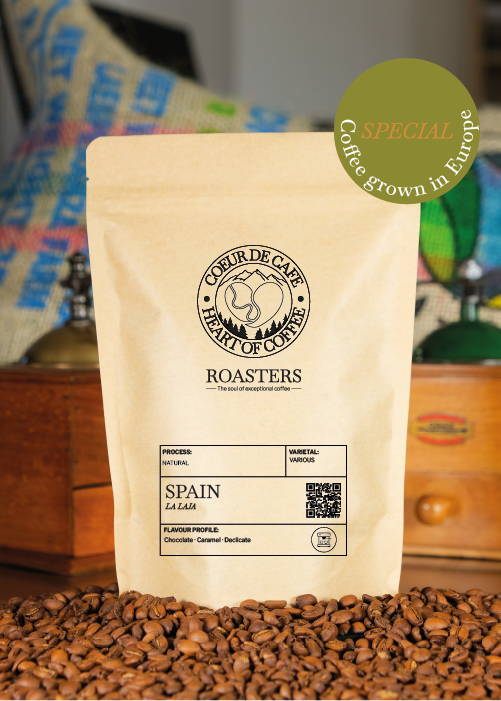
The machine decides how far into our range you can go. Many bean-to-cups grind only about 9–12 g for a strong cup and brew a little cooler than a manual machine. Our more expressive coffees tend to need a finer grind, a bigger dose and hotter water: depending on the machine, basically its price and build, some may not extract properly and lose what makes them special. So on a simpler machine, use our Everyday coffees: round cups with chocolate or cocoa notes.
| Your machine | Our coffees |
|---|---|
| Simpler (most machines under €500) | Everyday: Brazil Fazenda São Francisco and Ethiopia Djimmah; perhaps also Nicaragua Santa Maria and Guatemala Las Moritas |
| Mid-range (adjustable grind, strength and temperature) | All our Selection coffees and some of our Experimental ones |
| High end (J10 class and above) | All our ranges, Icon included, except perhaps Jamaica Blue Mountain |
Order them as whole beans, in our Espresso roast, or Omni if you also brew filter.
Our advice: test the coffee with your machine
- Start with an Everyday coffee, then move up our range one step at a time; if a coffee loses its character, go back a step.
- Put only a few days’ worth of beans in the hopper.
- Choose the strongest setting, a short cup and the highest temperature: on tested machines, stronger means more coffee per cup.
- Grind finer one step at a time, and taste two or three cups before the next change.
- Avoid very dark, oily beans: their oil coats a grinder you usually cannot take out to clean.
- Keep up cleaning, descaling and filter changes: Que Choisir reported a repair refused under warranty when they were skipped.
Not sure where your machine sits? Write to us at hello@heartofcoffee.fr with the model, and we will suggest where to start.
In our shop: Everyday coffees · Selection · Experimental · Icon · Espresso coffees · Omni coffees · Coffee for professionals
Read next: Best coffee beans for a bean-to-cup machine · Speciality coffee supplier for offices and restaurants
 English
 French