
Washed vs natural coffee: what’s the difference?
Washed and natural are two ways of processing coffee after the harvest. A washed coffee has its fruit removed before the beans are dried, and it usually tastes cleaner and brighter; a natural is dried whole, inside its cherry, and it usually tastes fruitier and rounder, with more body. Neither is better: choose the one whose flavours you like.
What is washed coffee?
The ripe cherries are depulped to remove the fruit, then the beans are fermented, washed and dried. Two of our coffees are washed: Jamaica Blue Mountain (lime, red berries, chocolate, very bright) and Guatemala Las Moritas (raspberry, grapefruit, dark chocolate, a winey finish).
What is natural coffee?
The whole cherry is dried, traditionally in the sun, with the fruit still around the bean. At Kinini, in Rwanda, the cherries dry this way for several weeks on raised beds, turned regularly so they dry evenly. Many of our coffees are naturals, among them Rwanda Kinini (blueberry, mango, chocolate), Nicaragua Santa Maria (blueberry, cherry, peach, plum) and Ethiopia Djimmah (berry, winey, cocoa).
Washed vs natural coffee: the taste
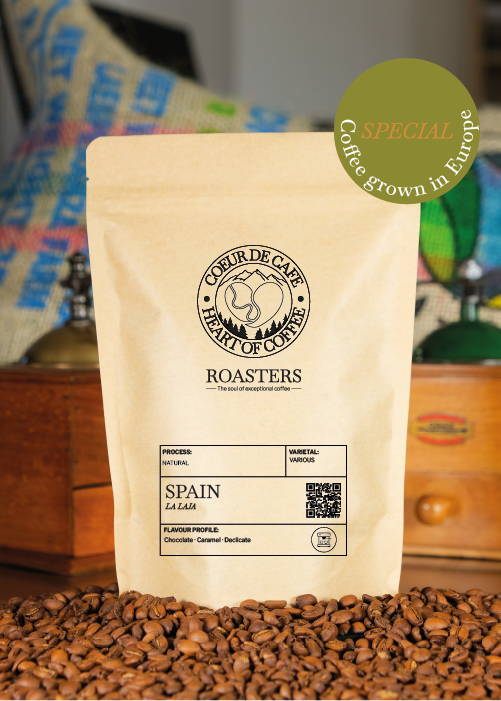
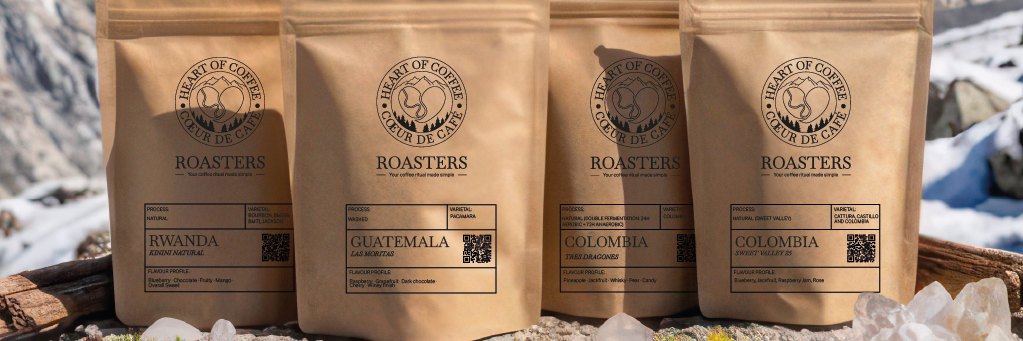
As a rule of thumb, washed coffees taste cleaner and brighter, naturals fruitier and rounder, sometimes winey. But the process is only one influence: origin, variety, altitude and roast count too. Our washed Las Moritas still ends on a wine-like note, while La Laja, a natural from Gran Canaria, is gentle: chocolate, light fruit, a clean finish. To compare, The Summit tasting set puts Las Moritas next to three naturals (one of them, Tres Dragones, also fermented without oxygen), in four 100 g bags (Espresso roast; Filter or Omni on request at checkout).
Washed or natural coffee for espresso?
Both work: for your machine, pick an Espresso roast, or Omni if you also brew filter (one roast that works for espresso and pour-over). A natural tends to give a fruitier, rounder espresso, a washed a brighter, cleaner one. Rwanda Kinini, Jamaica Blue Mountain and Guatemala Las Moritas all come in Espresso, Filter and Omni roasts.
And honey or anaerobic coffee?
Between the two sits honey, or pulped natural: the fruit is partly removed and the beans dry with some of the sticky mucilage still attached. Some producers also add a controlled fermentation without oxygen, in sealed tanks or containers: anaerobic fermentation, a step both of our Experimental coffees go through.
In our shop: Guatemala Las Moritas · Jamaica Blue Mountain · Rwanda Kinini · The Summit
Read next: What is anaerobic fermentation in coffee? · From seed to cup · How to choose good coffee beans



 English
 French