

Bitter or sour coffee: what’s the difference, and how to fix it?
Sour coffee is sharp, tangy and thin; bitter coffee is harsh and dry. Sour usually means under-extracted: the water drew too little from the grounds. Bitter usually means over-extracted, or roasted very dark. To fix a sour cup, grind finer or brew longer; to fix a bitter one, grind coarser or brew for less time.
How to tell bitter from sour
Sour coffee is sharp and tangy, a little like lemon juice with nothing sweet behind it, and often thin. Bitter coffee is harsh and dry, like toast left too long under the grill. Not sure? Brew the same coffee again a little finer, changing nothing else. If the cup improves, it was sour; if it gets worse, it was bitter, so go coarser than where you started.
Why it happens: acids first, bitterness last
Hot water dissolves the coffee’s compounds in a rough order: acids first, then sugars, and the bitter compounds last. Stop too early and the acids dominate, so the cup tastes sour; go too far and bitterness takes over. In a balanced cup, the water usually draws out about 18 to 22 % of the ground coffee’s weight: below that, coffee tends to taste sour; above it, bitter. Two settings do most of the work: grind size (finer extracts more) and contact time (longer extracts more). Change one at a time, and taste.
How to fix it, brewer by brewer
Espresso: our brewing guide aims for 25 to 30 seconds. A sour shot usually runs faster, so grind finer; a bitter shot usually runs slower, so grind coarser. V60 and Chemex: if the cup is sour and the brew ran short of the guide’s times (2.5 to 3 minutes for a V60, 4 to 5 for a Chemex), grind a little finer; if it is bitter and ran long, a little coarser.
French press: if it is sour, first check that it steeped the full 4 minutes of our guide, then grind a little finer; if it is bitter or muddy, grind coarser, and pour it all out once pressed: left on the grounds, it keeps brewing. Moka pot: bitterness often comes at the end, when the pot gurgles and steam rushes through the grounds; take it off the heat as soon as you hear it, and don’t press the coffee down in the basket.
When it is the roast, or the water
Roast matters too: in a University of California, Davis tasting study, darker roasts came out more bitter and burnt, lighter ones more floral and fruity, with more of the coffee’s acidity. Roasting is the main source of coffee’s bitterness, so a very dark roast stays bitter even when well brewed. We do not roast dark: no Italian-style roasts here, and only some of our coffees go as far as medium-dark. If one of ours tastes bitter, start with the grind and the time.
For filter and the French press, use water just off the boil, about 30 seconds after the kettle boils (roughly 92 to 96 °C). Our tasting guide also suggests slightly hotter water for a sour cup, slightly cooler for a bitter one. It is the smaller lever: in research by the same Davis team, drip coffees brewed between 87 and 93 °C tasted almost the same at equal strength and extraction, so change grind and time first.
Our coffees for a gentle cup, or a bright one
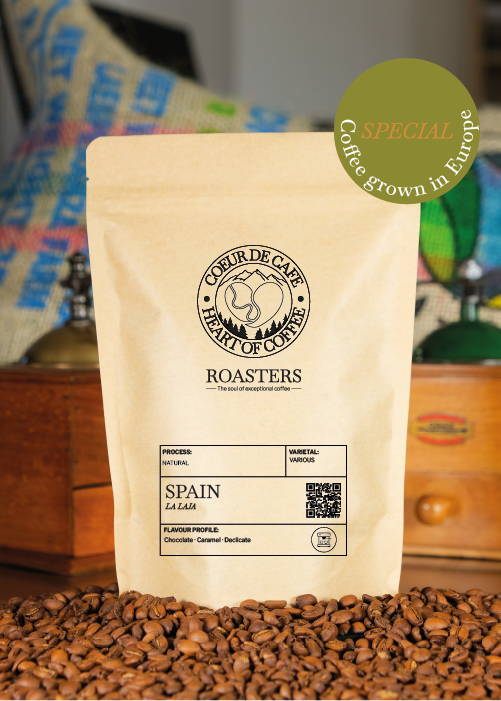
For a cup with little acidity, start from a naturally gentle coffee rather than a darker roast, which trades acidity for bitterness. Spain La Laja, from Gran Canaria, is soft and elegant, with low acidity: chocolate, light fruit and a clean finish (100 g, Espresso roast). Brazil Fazenda São Francisco is comforting: milk chocolate, roasted nuts, ripe plum, soft caramel and a round finish (Espresso or Filter roast).
Acidity itself is a quality, not a fault: a bright coffee, well brewed, tastes lively, never sour. If you like it, Colombia Sweet Valley 2024 brings red fruits and a white-wine brightness over a chocolate finish (Filter or Omni roast). Our two Experimental coffees are bright too, and more unusual, both fermented without oxygen: La Cabana 200 for 200 hours (strawberry, violet, vanilla), Tres Dragones for 72 hours after 24 with air (pineapple, jackfruit, pear); each comes in Espresso or Filter. Rwanda Kinini is a gentler start: a little brightness, blueberry and mango over chocolate (Espresso, Filter or Omni).
In our shop: Spain La Laja · Brazil Fazenda São Francisco · Colombia Sweet Valley 2024 · Experimental coffees · Rwanda Kinini
Read next: How coffee tastes · Our brewing guide · What is anaerobic fermentation in coffee? · Best coffee for a moka pot · Best coffee for a French press, and how to brew it


 English
 French